When a Business Needs a Custom Web App Instead of a Website
A website explains and converts. A custom web app supports workflows, portals, dashboards, intake, permissions, and operational processes.
This article is an editorial preview. Publication readiness, attribution, and indexing approval are incomplete, so this page remains noindex.
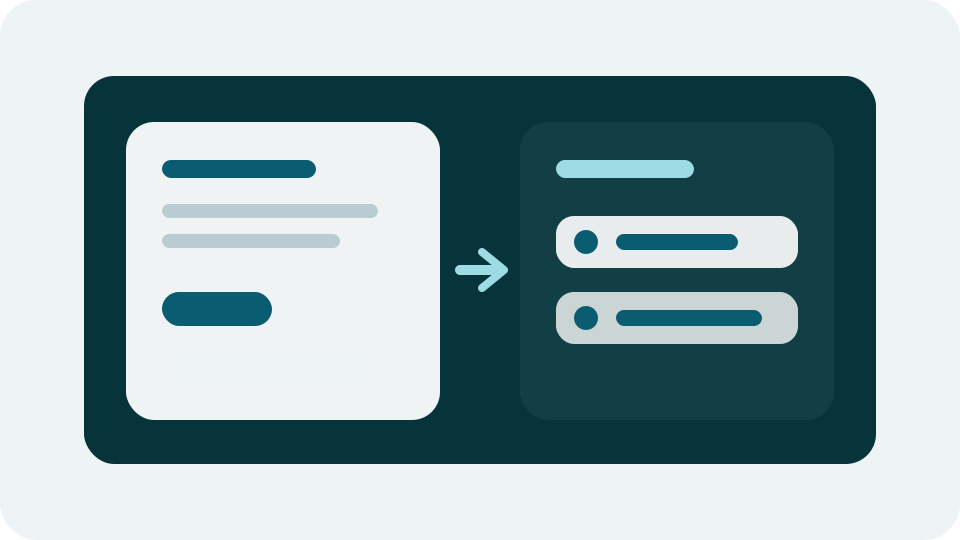
Websites and web apps solve different problems
A website is usually built to explain, build trust, rank in search, and generate leads or sales. A custom web app is built to help users complete a workflow. That workflow might involve intake, approvals, dashboards, portals, scheduling, reporting, or internal operations.
The distinction matters because the planning process is different. A website needs content architecture and conversion strategy. A web app needs user roles, permissions, data flow, interface states, validation, security, and maintainable product logic.
When a website is enough
Many businesses do not need a custom app right away. If the primary goal is to describe services, publish content, collect leads, or sell a standard product catalog, a well-built website may be the right investment.
A website can still be powerful. Service pages, industry pages, ecommerce flows, blog content, and proposal forms can solve many business needs without introducing unnecessary app complexity.
Signals that a custom web app may be justified
A custom app becomes more relevant when the business process itself is creating friction. If teams rely on manual handoffs, spreadsheets, repeated email updates, or disconnected tools, a focused web app can reduce operational drag.
The key is scope discipline. The first version should solve the smallest valuable workflow instead of trying to recreate every internal process at once.
- Users need accounts, permissions, or role-specific views.
- A workflow has multiple steps, statuses, or approvals.
- The business needs a dashboard or portal for clients or staff.
- Manual intake and follow-up are slowing operations.
- Existing tools cannot support the needed process cleanly.
Plan the system before building the interface
A custom web app should start with workflow mapping, not screen decoration. The team needs to understand users, permissions, data, state changes, notifications, and where the app connects to existing business operations.
That planning protects the budget and the user experience. A focused, maintainable app is usually more valuable than a large system that tries to solve everything at once.
Continue exploring
Related Guidance and Examples
Related articles
Read Next
Conversion Strategy
What Makes a Website Conversion-Focused?
A conversion-focused website aligns message, structure, proof, speed, and calls to action around the decisions visitors need to make.
Lead Generation
How to Structure Service Pages for Better Leads
Strong service pages explain the offer, answer buyer questions, build trust, and make the next step obvious without turning the page into a hard sell.