Starting context
The Situation
The scenario assumes shoppers can reach products but struggle to understand categories, compare options, find trust information, or predict the checkout experience on smaller screens.
Illustrative Project Example
Storefront UX and technical planning
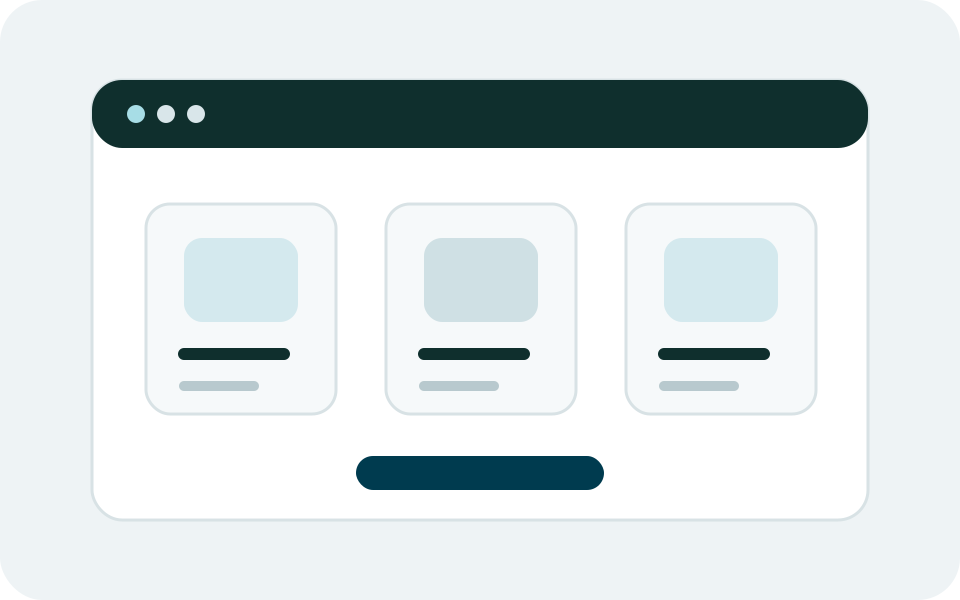
A storefront planning framework that reduces discovery friction while keeping platform, catalog, checkout, and measurement dependencies explicit.
Illustrative concept
No merchant, product catalog, ecommerce platform, sales history, or checkout data is represented.
Project snapshot
Starting context
The scenario assumes shoppers can reach products but struggle to understand categories, compare options, find trust information, or predict the checkout experience on smaller screens.
Core challenge
UX recommendations must respect catalog quality, platform constraints, fulfillment rules, payment providers, and analytics reliability. Interface polish cannot compensate for incomplete product information.
Goals and boundaries
Strategy and tradeoffs
Categories, attributes, variants, and filters determine whether discovery remains coherent at scale.
Dense product information and persistent actions fail fastest when space is constrained.
Shopify, WooCommerce, or another system should follow operational needs rather than an illustrative concept.
Implementation
The concept documents catalog structure, category and product templates, comparison cues, trust and policy placement, mobile actions, checkout handoffs, SEO controls, and analytics requirements. The specific platform and integrations remain discovery decisions.
Outcomes and evidence
This concept has no delivered or commercial outcome. The useful evidence is therefore a defined set of quality checks and an honest measurement plan.
No transactions, conversion rate, average order value, abandonment, or performance data exist for this concept. Those measures require a real catalog, analytics quality checks, and comparable time periods.
Continue evaluating
These links are limited to pages that share a direct planning relationship with this concept.
Related work
Product discovery and application UX
A product-discovery model for replacing fragmented intake and status tracking with the smallest useful, permission-aware workflow.
Next step
Share the problem, audience, current system, useful evidence, timeline, and constraints. Ozodeck will review the context and respond with an appropriate next step. Submitting an inquiry does not create a contractual commitment.